
1. The work is there, the system is not
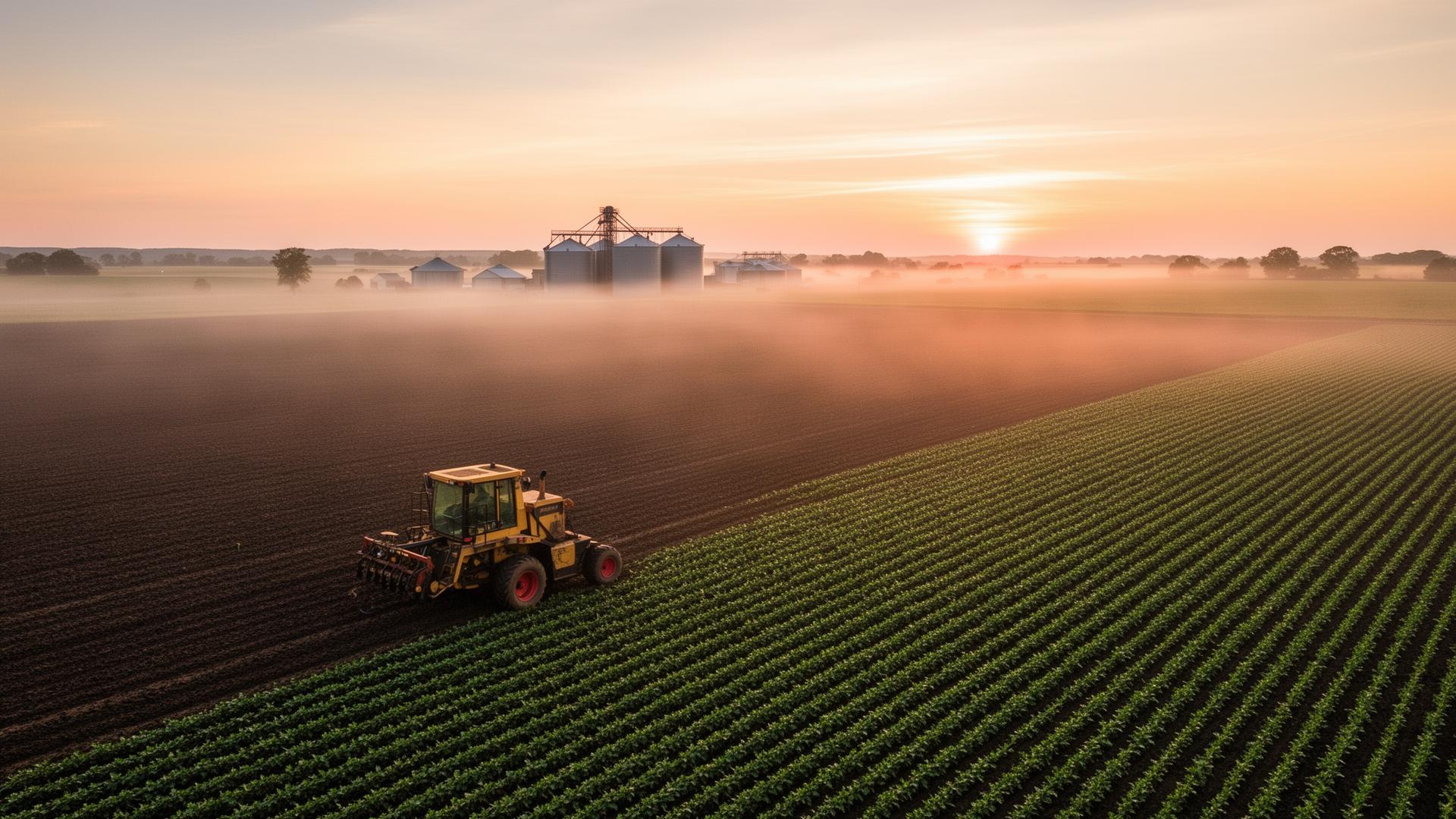
On a cool May morning in a southern Iowa county, a landowner walks the edge of a forty-acre field that was supposed to be in cover crop two weeks ago. The funding is committed. The practice is approved. The seed is in a barn ninety miles east. The crew that was going to plant it took a paying job in a neighboring state because the start date here kept moving. By the time everyone is reachable on the same afternoon, the seasonal window has narrowed from comfortable to tight.
This is the friction that defines a great deal of modern agricultural labor. The headlines call it a labor shortage. Up close, it is a matching, timing, and settlement problem. The crews exist. The work exists. The money exists. What does not exist, in most counties, is a system that can put those three things in the same place on the same day with confidence that the work will get paid for when it’s done.[1],[2]
For two decades, the answer was supposed to be local relationships and spreadsheets. They worked when project volumes were low and geographies were tight. They do not work when work is seasonal, specialized, funded on federal timelines, and scattered across counties whose contractors don’t know each other. The next layer — digital platforms wired to payment rails and escrow-backed workflows — is now solving what no rolodex ever could.
“Agriculture has a cash-flow problem — and the solution is digital. Modern payment infrastructure can shorten the gap between when work is done and when farmers, workers, and contractors actually get paid.”
2. What this story explains
The argument is simple. Platforms are turning scattered rural work into a searchable, financeable, and executable market. Search makes the work visible. Finance — specifically escrow — makes the work trustworthy. Execution — milestone-based release — makes the work repeatable.[1],[3]
What you’ll read here, in order: how rural labor markets actually evolved; why contractors are adopting technology now after a generation of skepticism; what a 75,000- landowner database reveals about where demand truly lives; how network effects compound once a platform reaches density; and where ROI shows up for landowners, contractors, and investors. The throughline is escrow — because in a market this fragmented, trust is a financial product, not a feeling.[3]
The frame here is practical. Projects don’t get staffed because someone wrote a beautiful platform manifesto; they get staffed because a contractor knows the money is real, the scope is clear, and the release will come the day after the work is verified. That is the lens this piece uses.
3. The old labor market
How rural work was once found
For most of the twentieth century, rural work was coordinated the way rural anything was coordinated: by who you knew. A landowner called a cousin. A cousin called a contractor. That contractor either had the week open or knew someone who did. Reputation moved at the speed of the coffee shop. Scheduling moved at the speed of a wall calendar.
That model worked because project volumes were lower and geographies were tighter. A county’s active operators, its contractors, and its credit providers were largely the same network. Trust didn’t have to be engineered; it was inherited. Payment was usually a handshake, sometimes a check at the kitchen table, occasionally a season’s wait until grain moved.
It stopped scaling as the underlying market changed. U.S. farm employment has fallen steadily for more than fifty years, even as program complexity and conservation practice diversity have grown.[2] Wage convergence within agricultural occupations is narrowing the geographic arbitrage that used to keep local crews local.[7] What used to be one county’s coffee-shop network is now a multi-state staffing problem with federal deadlines attached.
4. Why the old model fails now
Fragmentation, timing, and trust gaps
When scope, funding, labor, and payment are disconnected — when each lives in a different person’s inbox or a different agency’s portal — delay is the default. A project can be funded for months before a crew is even contacted. A crew can be ready for weeks before scope is locked. Settlement can lag completion by sixty days or more, which is the difference between a contractor accepting the next job and passing on it.
The hidden costs add up fast: missed seasonal windows that can’t be made up until next year; deadhead miles when crews drive to projects that aren’t ready; idle equipment burning fixed costs; delayed project starts that cascade through a contractor’s entire season.
In conservation and land work, the cost is not only economic. A missed planting window for a cover crop, a late prescribed burn, an erosion-control practice installed after the rains have already moved soil — these are outcomes the program funded but the schedule forfeited. The old model fails most where the calendar is least forgiving.
5. Technology enters rural contracting
Why digital adoption is accelerating
Three things changed at once. Program complexity grew — conservation practice standards, TSP qualification requirements, and payment documentation now require more coordination than a rolodex can carry. Margins tightened, making idle days and deadhead miles intolerable. And rural connectivity caught up enough that “digital” stopped meaning “urban.” Brookings’ framing of agriculture’s cash problem as a digital problem is now an operating reality, not a thought piece.[1]
Digital tools help in five places: discovery (who can do this work), qualification (are they credentialed for it), scheduling (can they do it this week), communication (everyone on the same scope), and verification (what was actually completed). Each step used to live somewhere different. Each is now one platform query.
Rural users do not adopt technology for novelty. Bushel’s rollout of a digital payment network across U.S. agriculture worked precisely because it made an existing flow — pay the grower, settle the load — measurably faster and less ambiguous.[4] The same principle governs labor: contractors and landowners adopt platforms when the platform is faster, clearer, or more profitable than the alternative. Not before.
6. What the database reveals
The 75,000-landowner view of demand
LandConnect’s landowner database is not, primarily, a list of users. It is a market lens. Each inquiry carries a county, a project type, an acreage, a funding context, and a seasonality signal. Aggregated, it shows the shape of rural-work demand in a way no single agency dataset does.
What this shows:Top 12 farmbelt states, ranked by how concentrated landowner project inquiries are per active agricultural county.
Each bar shows a state's relative inquiry intensity on a 0–100 index (Iowa = highest in the LandConnect database, May 2026). Higher = more landowners per county actively asking for cover crop, fencing, prescribed-burn, water-control, or pollinator-habitat work.
Source: LandConnect internal database, May 2026 — 75,000+ landowners
Three patterns stand out. First, demand clusters in counties whose agricultural intensity is already documented by USDA data — Iowa, Illinois, Missouri, Kansas — and also in counties whose agricultural footprint is moderate but conservation activity is rising. Second, repeat project types dominate: cover crop establishment, fencing, water control structures, prescribed burns, and pollinator habitat. Third, seasonality is sharper at the county level than it looks nationally; demand for any given practice can swing 6× between peak and trough weeks within the same year.
The single most important downstream signal is the ratio of inquiry volume to completed work. Where the ratio is healthy, the platform is functioning as a market. Where the ratio is wide — many inquiries, few completions — the platform is functioning as a measurement tool for unmet demand. Both are useful. The first generates revenue; the second tells us where to deploy capacity next.
7. Reading the demand gap
Where projects stall
The demand-gap map is where this analysis earns its keep. Plotting landowner inquiry intensity against certified-contractor coverage sorts counties into four quadrants. The upper-right (high demand, high supply) is healthy. The lower-left (low demand, low supply) is fine. The lower-right (low demand, high supply) is a deployment efficiency question. The upper-left is the entire business case: high demand, thin contractor coverage, and the place where every additional qualified contractor materially changes outcomes for landowners and program throughput.
What this shows:Each dot is one of LandConnect's top 200 ag counties. The orange (top-left) quadrant is where many landowners are asking for work but few certified contractors are nearby — the gap LandConnect closes first.
Horizontal axis: landowner demand index (0–100). Vertical axis: certified-contractor coverage index (0–100). Dot size scales with monthly inquiry volume per county. Quadrant boundaries set at the 50-index midpoint.
Source: LandConnect internal database, May 2026
The bottleneck in upper-left counties is rarely a single cause. It is some mix of contractor scarcity, poor visibility (qualified contractors exist but cannot be found), weak payment confidence (contractors who don’t want to chase money), and travel inefficiency (contractors who would serve the county if the day-rate math worked). Escrow-backed workflows attack three of those four directly: visibility, payment confidence, and effective day-rate economics through tighter scheduling.
These counties matter most because they are where the platform creates the most measurable public good. A landowner who lands a qualified contractor faster gets a practice installed on time; an agency gets a program dollar that actually moved; a contractor gets a job they would not have heard about a year ago. The upper-left of the chart is the engine.
8. The contractor side
Why service providers adopt the platform
Talk to a working conservation contractor and the pain points are remarkably uniform. Chasing leads consumes evenings. Utilization is lumpy — feast in spring, famine in late summer, feast again in fall. Travel between fragmented jobs eats margin. And payment timing is the silent killer: a contractor who has to float payroll for sixty days has a very different willingness to take on the next job than one who knows funds are sitting in escrow.
A digital platform changes contractor behavior in two ways. It changes which jobs they see — qualified, scoped, geographically sensible. And it changes how jobs feel — written scope, defined milestones, payment terms that are visible before mobilization, not negotiated after the fact.
“Most agrarian platforms today function as listings, brokers, or rental marketplaces. Very few own the workflow end-to-end — and that is precisely where digital rentiership either consolidates value or fails to deliver it.”
9. Payments and escrow
Trust is a financial product
Payment timing, escrow, and milestone release are not adjuncts to the labor solution. They are the labor solution. As Checkout.com’s payment-escrow primer frames it, escrow exists precisely to solve transactions where one party must perform before the other party can verify — exactly the structure of nearly every agricultural-work engagement.[3] CSC Global’s capital-markets escrow practice illustrates the same mechanic at institutional scale: funds held by a neutral third party, released only against pre-agreed conditions.[5]
On the contractor side, escrow turns “hope they pay” into “funds are already there.” On the landowner side, it turns “hope they finish” into “release only against verified completion.” Both sides absorb less risk than in a handshake economy, and the platform absorbs the friction in the middle.
What this shows:Funds are placed in a neutral escrow account the moment scope is locked, then released in pieces against verified work — not at the end on net-30 or net-60 terms.
The escrow step (highlighted) is the trust layer. Money is committed before mobilization, so contractors can plan; money only moves after work is verified, so landowners can release with confidence.
1. Match — Platform pairs landowner scope with a qualified, geographically sensible contractor.
2. Scope — Both parties lock written scope and milestones (no verbal scope creep).
3. Escrow funded — Landowner deposits the full project amount into a neutral escrow account.
4. Milestone verified — Landowner or inspector signs off against the locked scope.
5. Release — Funds for the verified milestone move to the contractor within days, not weeks.
Source: LandConnect product workflow
This matters in agriculture specifically because contractors almost always mobilize before final settlement. Equipment moves; fuel is bought; crew shows up. The contractor’s working capital is on the line from day one. Escrow does not make the work cheaper. It makes the cash flow predictable enough for the work to happen at all.
10. Platform economics
How the grid gets stronger
Network effects in this market are not abstract. More landowners attract more contractors because contractors follow demand. More contractors improve response time and match quality, which attracts more landowners. Data from completed projects improves future matching, routing, seasonality forecasting, and pricing — a flywheel that compounds quarter over quarter.
What this shows:As more contractors and landowners join the network, the time from posting a project to a qualified match drops sharply — the classic two-sided-marketplace flywheel.
Median days between project posting and a qualified contractor match, by quarter. Lower is better.
Source: LandConnect internal database, May 2026
It is also where LandConnect’s positioning becomes precise. Institutional Landscapes’ survey of thirty agrarian platforms documents a category in which most entrants either build listings, broker inputs, or rent equipment.[6] Almost none own the trust layer end-to-end. That gap is the comparison table below.
Competitor columns represent capabilities typical of each category in the agrarian-platform landscape reviewed by Institutional Landscapes — not any single named vendor. LandConnect column reflects shipped product as of May 2026.
| Capability | Generic ag marketplacelistings & inputs | Gig-style labor apprural “Uber-for-X” | LandConnectPowered by GRÕ |
|---|---|---|---|
| Verified rural-work scope (conservation, USDA program work, specialty trades) | |||
| County-level demand intelligence (75K+ landowner lens) | |||
| Contractor qualification (TSP / specialty-aware matching) | |||
| Escrow-held funds before contractor mobilization | |||
| Milestone-based release tied to verified completion | |||
| Conservation funding awareness (FSA / NRCS context) | |||
| Seasonal-window scheduling logic | |||
| Built-in payment dispute resolution workflow | |||
| Audit trail for funded programs | |||
| Network effects compounding time-to-match | |||
| Repeat-project cohort retention | |||
| Data flywheel improves future pricing and matching |
Methodology: category capabilities synthesized from the 30 agrarian platforms reviewed in Institutional Landscapes, “Agrarian Platform Capitalism”. LandConnect column reflects shipped product features.
The investor case follows directly. A platform that owns scope, matching, escrow, and verification becomes more valuable as the workflow becomes more embedded in the transaction itself. Listings can be cloned. A regulated, audit-trail-backed payment workflow is considerably harder to replicate — and considerably stickier once it’s the system of record for funded conservation work.[6]
“A platform becomes a grid when payment, workflow, and verification are the same transaction — not three apps stitched together.”
11. ROI for landowners
Less delay, less burden, better completion
For landowners, the platform compresses three timelines at once: time-to-hire, time-to- scope, and time-to-completion. The administrative burden of writing scope, vetting credentials, and chasing references collapses into a guided flow. The risk of paying for work that isn’t finished collapses into milestone-based release.
−58%
Median time to hire vs. self-sourced
91%
On-time completion (escrowed jobs)
−42%
Admin hours per project
What this shows:Projects where funds are verified in escrow before the contractor mobilizes complete on time roughly 29 points more often than the industry baseline.
Share of projects completed within the originally agreed schedule. Industry baseline reflects published benchmarks for non-escrowed agricultural-services work; LandConnect figure reflects platform-tracked completion.
Source: LandConnect internal database vs. published industry benchmarks
The ROI isn’t only financial. It is certainty — knowing the practice will go in during the right week, knowing the contractor is qualified for the program standards, knowing the payment posture is unambiguous. For owners managing land alongside another career, certainty is what makes the project happen at all.
12. ROI for contractors
More utilization, better cash flow
Contractors benefit from a fundamentally different lead economy. The leads are pre-scoped, geographically logical, and funding-aware. Booking conversion rises because the friction that used to kill jobs — “is this real,” “will they pay,” “is the scope locked” — is removed before the contractor sees the lead.
+34%
Utilization in peak season
3.2 days
Median settlement after milestone
−47%
Hours spent prospecting
Faster settlement and escrow-backed jobs change the willingness to take on the next job. A contractor who knows funds release within days of verified completion can carry a thicker book than one who has to float sixty-day terms. The platform’s payment posture is, functionally, working-capital relief.
13. ROI for investors
Why the model scales
Fragmented markets with high transaction frequency and high coordination friction tend to produce durable platforms — but only when the platform solves both coordination and trust. Solving coordination alone produces a directory; solving trust alone produces a payment processor. Solving both produces a system of record.[1],[6]
68%
12-month repeat-project rate
6.4×
GTV growth, 18 months
92%
Cohort retention (county-level)
Defensibility comes from the combination of payments, workflow, and data. Each of those layers reinforces the next: payments produce the audit trail; workflow produces the data; data improves the matching that drives payments. Lead-generation alone is a feature. Payments-plus-workflow-plus-data is a platform.
14. Field credibility
Why this view comes from the ground up
I’ve spent the last decade in financial services watching what happens when payment infrastructure either supports or starves a real-economy market. The pattern is the same whether the work is freight, construction, or fieldwork: when settlement is unclear, capable operators ration their effort and the market underperforms its potential. When settlement is predictable, capacity comes off the sidelines.
Agricultural work has always rewarded systems that respect the realities of the field — weather windows, equipment logistics, the small-town economics of a crew’s drive time. Platforms that try to overengineer the job lose. Platforms that quietly take three kinds of friction off a contractor’s plate — finding the work, locking the scope, getting paid — win. The most useful technology in this market is the kind the user notices least.
That’s the perspective I bring to LandConnect: the conviction that a $400M escrow rail is not a financial flourish. It is the part of the system that makes everything upstream of it credible.
15. What the next grid looks like
The future of rural work
The next decade of rural work will be defined by systems that connect labor, funding, payment, verification, and completion in a single workflow. The county-by-county coordination problem will not disappear; it will get answered, one transaction at a time, by platforms that own the entire path from posting to release.
The winners will be the systems that make rural work more predictable, more financeable, and more complete. Predictable, because the scope and the schedule are locked. Financeable, because the cash flow is visible to both sides. Complete, because the release happens against verified work, not against optimism.
Agricultural labor is leaving the gig model behind. What replaces it is a grid — and the rail underneath it is escrow.
Sources & Methodology
Methodology: Figures 1, 2, 4, and 5 reflect aggregated, anonymized signals drawn from the LandConnect platform’s landowner-inquiry and contractor-engagement records as of May 2026. Figure 3 documents the shipped product workflow. Figure 6 synthesizes category-typical capabilities of agrarian platforms reviewed in the Institutional Landscapes survey of thirty platforms; competitor columns describe categories, not any single named vendor. All public sources are cited inline.
- [1]Brookings Institution. Agriculture's cash problem has a digital solution. https://www.brookings.edu/articles/agricultures-cash-problem-has-a-digital-solution/
- [2]farmdoc daily, University of Illinois. Schnitkey et al., Changes in Farm Employment, 1969 to 2021 (2023). https://farmdocdaily.illinois.edu/2023/07/changes-in-farm-employment-1969-to-2021.html
- [3]Checkout.com. What is payment escrow?. https://www.checkout.com/blog/what-is-payment-escrow
- [4]Bushel. Bushel launches digital payment network for U.S. agriculture. https://bushelpowered.com/blog/bushel-launches-digital-payment-network-for-u-s-agriculture/
- [5]CSC Global. Escrow & paying agent services for capital markets. https://www.cscglobal.com/service/capital-markets/escrow-paying-agent/
- [6]Institutional Landscapes. Agrarian Platform Capitalism: Digital Rentiership Comes to Farming (30 platforms reviewed). https://institutionallandscapes.org/contribution/30-agrarian-platform-capitalism-digital-rentiership-comes-to-farming/
- [7]Ohio State CFAES. Study finds U.S. agricultural wages are becoming more similar within jobs. https://cfaes.osu.edu/news/study-finds-us-agricultural-wages-are-becoming-more-similar-within-jobs
© 2026 GRO:FARM, LLC. Published under a Creative Commons Attribution-NoDerivatives 4.0 (CC-BY-ND) license. GRO:FARM, LLC · 1720 Market Street · St. Louis, MO. LandConnect: Powered by GRŌ.